The EU puts security at the head of a new Arctic strategy built with its northern neighbours
The European Commission's new strategy for the Arctic, adopted on Tuesday, organises cooperation with partners including Norway around four priorities: security, climate, economy and people.
OSLO: The European Commission and the High Representative adopted a new strategy for the Arctic on Tuesday, Oct. 20, titled Europe's Northern Neighbourhood, the Commission said. The strategy builds on the EU's 2021 Arctic policy and responds to the geopolitical, security and environmental changes since then: stronger competition, rising pressure on critical infrastructure, faster environmental change and new economic dynamics in shipping, energy, digital links and critical raw materials. At its heart sits the Northern Neighbourhood, a political framework for closer and more structured cooperation between the EU, its member states, Arctic partners and other like minded partners. The Commission names Norway among the partners it works closely with in the Arctic, alongside Iceland, the United Kingdom, Canada and the United States.
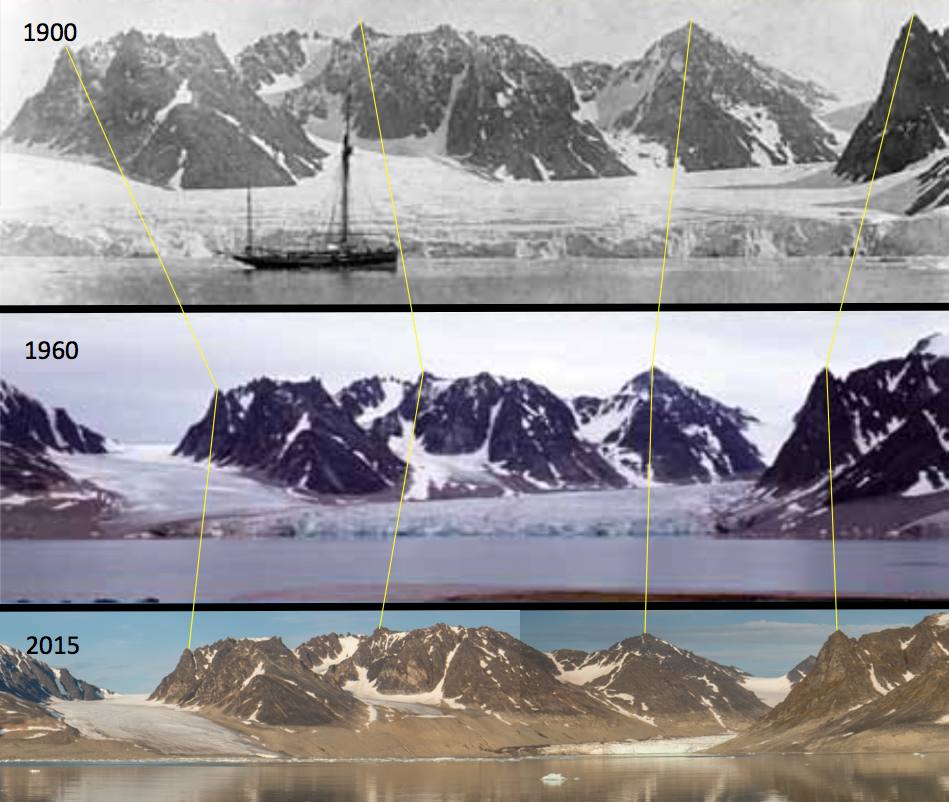
The case for acting now, in the Commission's telling, is the speed of change in the far north. The Arctic is warming nearly four times faster than the global average, the Commission said, affecting ecosystems, livelihoods and communities, and more than half a million EU citizens live in the Arctic through the Kingdom of Denmark, Finland and Sweden. Commission President Ursula von der Leyen said: "The Arctic is Europe's Northern Neighbourhood - close, connected and critical to our future."
Security is now a stronger part of the EU's Arctic approach than in 2021. The EU will work with its member states and Arctic partners, in complementarity with NATO, on preparedness, on shielding critical infrastructure, and on building Europe's capacity to operate in Arctic conditions, with better monitoring, closer information sharing and a stronger ability to respond when risks emerge at sea or on land. The flagship projects are a Maritime Security Hub for information sharing from seabed to space, beginning with an Arctic Cable Hub to monitor, protect and support the repair of submarine cables in the North Atlantic and Arctic, work to expand European icebreaker capacity, and an Arctic surveillance pilot planned for 2027.
The climate strand keeps the EU's wider targets in force in the north: the strategy maintains the ambition of a 90 percent net emissions reduction by 2040 and climate neutrality by 2050, and strengthens climate research, observation and monitoring. Its OceanEye flagship, a new ocean monitoring initiative, will bring together EU member states and partners including Canada and Norway to collect and share ocean data, improving climate prediction, maritime safety and adaptation. The economy strand adds a Pan Arctic Cable for submarine connectivity linking Greenland directly to Europe, with possible extensions towards Canada and Japan, secure satellite connectivity under the IRIS2 programme, and a new EU Polar Research Hub built by reinforcing the European Polar Coordination Office.
The fourth priority is people. The strategy places Arctic local communities and Indigenous Peoples at the centre of the EU's approach, with a focus on education, employment, skills and social inclusion, expanded Erasmus+ opportunities for Arctic young people, and an Arctic Mayors' Forum initiative bringing together 22 Arctic towns and cities. The EU says it will uphold the principle of free, prior and informed consent in its dialogue with Indigenous representatives. The strategy was prepared after exchanges with governments, young people, local communities, Indigenous Peoples, businesses and researchers across the Arctic, and is meant to complement existing structures, including the Arctic Council.
None to date. The Tribune corrects errors promptly and transparently. Read our corrections policy.