Norway will buy carbon credits from new solar and wind power in Morocco and Indonesia
Two purchase agreements announced on Nov. 16 will pay for verified emission reductions from new renewable energy projects in Morocco and Indonesia, under Article 6 of the Paris Agreement.
OSLO: Norway has agreed to purchase carbon credits generated by new renewable energy projects in Morocco and Indonesia, in two agreements the Government announced on Monday, Nov. 16.
For Morocco, the ceiling is 8.78 million tonnes of reductions across ten years, which Norway can purchase as carbon credits once new solar and wind projects there deliver them. Under the Indonesian programme, Norway will purchase up to 12 million tonnes of emission reductions from new renewable energy projects over ten years, according to the account of the Government statement published by pv magazine, the solar trade publication.
Payment only for delivered reductions
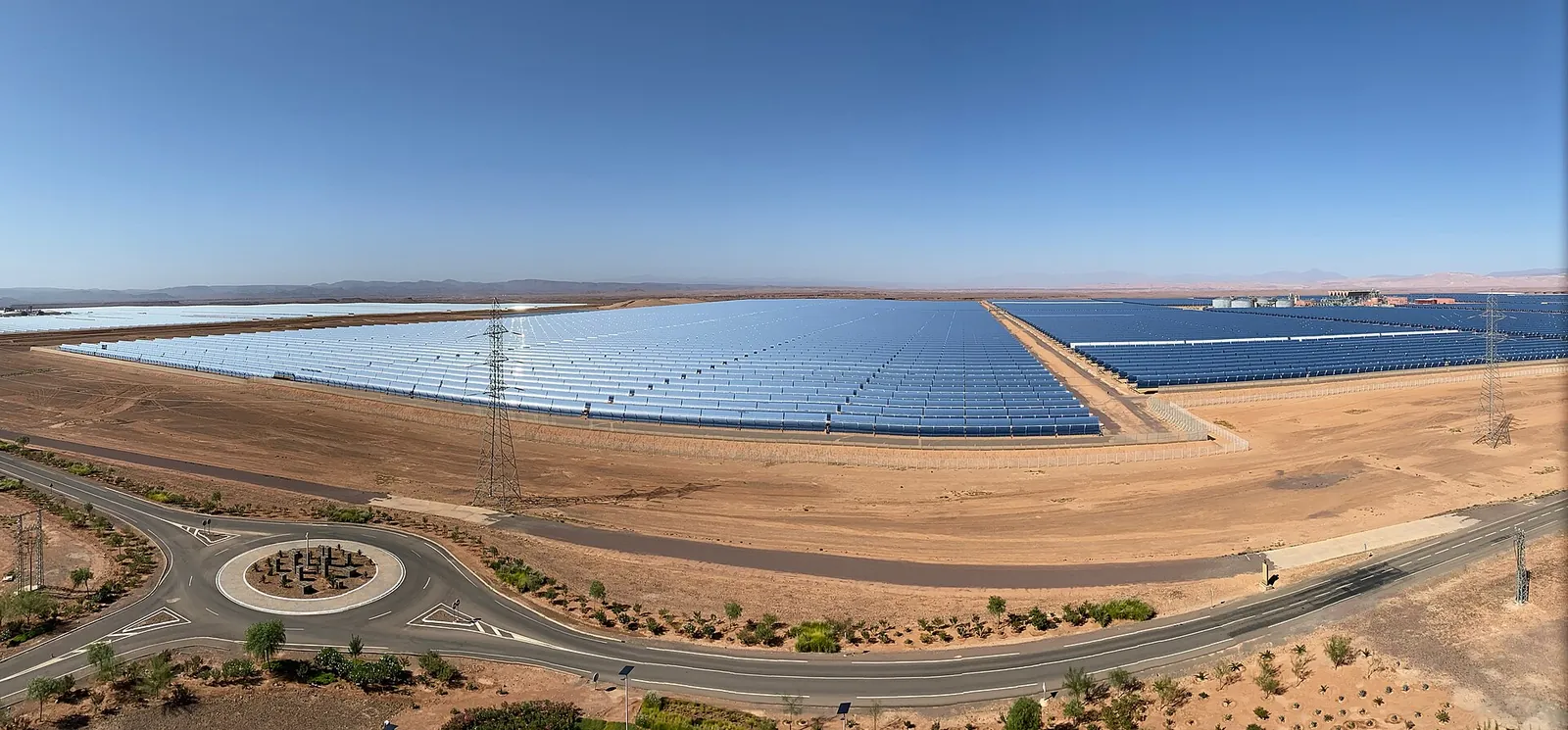
The Moroccan programme exists because many renewable projects there are not built today even though conditions for solar and wind power are good: at current prices they are not commercially viable. Norwegian funding is designed to top up the revenues of projects that qualify, so that schemes which cannot cover their costs at current prices can proceed. Norway will pay only once a reduction has been achieved, verified and delivered, and each reduction will be counted only once, in line with the Paris Agreement rules.
The purchase agreement was signed on Nov. 12 at the Morocco Pavilion at the COP31 climate conference in Antalya, in a ceremony chaired by Morocco's Minister of Energy, Mines and Sustainable Development, Charafat Afailal, in the presence of Norway's Minister of Climate and Environment, Sigrun Aasland, according to the Global Green Growth Institute (GGGI), which facilitated the agreement through its Carbon Transaction Facility. It puts into operation Morocco's Generation-Based Incentive programme, which channels payments tied to results to extra renewable generation and battery storage that struggle to raise finance on ordinary terms.
The institute says the Moroccan programme aims to mobilise about 2 gigawatts of new renewable energy capacity, with the purchased outcomes to be generated between 2027 and 2036. Work now turns to finishing the programme rulebook, setting up how results will be monitored, reported and checked, and running an initial pilot, with the first outcomes expected in 2028. The agreement builds on the bilateral agreement the two countries' climate and energy ministries signed in May, and the Government says the programme carries strict requirements for monitoring, verification and reporting, and sits inside the frame of Norway's policy on Western Sahara.
Indonesia: floating solar first
The Indonesian agreement was signed on Nov. 11 at the Indonesia Pavilion at COP31 and is that country's first purchase agreement of this kind under Article 6.2 of the Paris Agreement, according to GGGI. The institute signed on Norway's behalf with PT PLN, Indonesia's state-owned electricity company, and the signing was witnessed by Indonesia's Minister of Environment, Moh Jumhur Hidayat, and by Aasland.
It supports Indonesia's own Generation-Based Incentive programme, a results-based scheme for new and additional clean generation connected to the grid. Its first technological focus is floating solar power, paired where possible with battery storage so that renewable electricity can be delivered during peak and evening hours, when grid emissions are highest. Output from each project is recorded digitally and checked by independent auditors, and operators are paid according to what their projects actually deliver.
Both agreements are supported through the Norwegian Article 6 Climate Action (NACA) Fund, hosted under the institute's Carbon Transaction Facility, and form part of Norway's Global Emission Reduction Initiative. GGGI describes the Indonesian agreement as expected to be among the largest transactions under Article 6.2 to date.
None to date. The Tribune corrects errors promptly and transparently. Read our corrections policy.